7 Best Stephen King Novels Hollywood Still Hasn’t Adapted
Read about the best Stephen King novels Hollywood hasn’t adapted yet and why these books are perfect for psychological horror movies today.
 Rafat Shakeel Chaudhary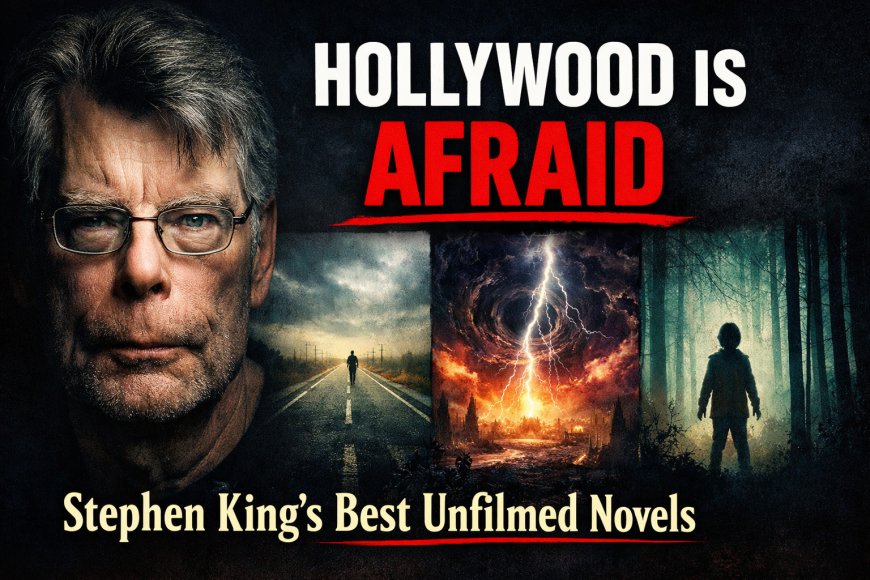
Stephen King is one of the most adapted authors in film history, with dozens of movies and TV series based on his work. However, several of his most powerful and cinematic novels have still not received proper Hollywood adaptations. Many of these stories focus on psychological horror, moral conflict, and human fear rather than visual spectacle—making them ideal for today’s prestige cinema and streaming platforms.
As audiences increasingly prefer slow-burn, character-driven horror over loud CGI-heavy films, these overlooked Stephen King novels feel more relevant than ever. Their themes of isolation, belief, identity, and survival align perfectly with modern storytelling trends in elevated and psychological horror.
This list highlights the best Stephen King novels Hollywood still hasn’t adapted properly, explains why earlier attempts failed or never happened, and explores why now is the right time to bring these stories to the screen.
Why Stephen King Stories Still Work on Screen
Stephen King’s stories continue to work on screen because their horror is built on psychological depth and human emotion, not just supernatural spectacle. His novels focus on internal fear, moral pressure, and believable characters, which makes them especially effective as modern horror film adaptations and prestige streaming series.
In an era where audiences prefer character-driven and elevated horror, Stephen King’s storytelling style feels more relevant than ever.
Key Reasons Stephen King Adaptations Succeed
1. Fear Begins in the Human Mind
Stephen King’s horror often starts as psychological unease before becoming supernatural. This approach works exceptionally well in psychological horror films, where tension grows through atmosphere rather than jump scares.
2. Deep, Realistic Characters
His characters are emotionally flawed, ordinary people placed in extraordinary situations. This realism is a major reason why Stephen King movie adaptations resonate strongly with audiences.
3. Timeless and Universal Themes
Themes like power, faith, guilt, fame, isolation, and identity appear across many Stephen King novels. These ideas age far better than CGI-driven horror, making them ideal for long-lasting horror book adaptations.
4. Perfect Fit for Prestige Horror Cinema
Because his stories rely on mood, tension, and moral conflict, they adapt naturally into elevated horror movies and prestige horror cinema rather than blockbuster-style films.
5. Lasting Emotional Impact
When adapted with care, the best Stephen King books turned into movies don’t just scare viewers—they leave a psychological and emotional impact that stays long after the film ends.
Why Hollywood Still Hasn’t Adapted This Novel
Despite its strong cinematic potential, this novel’s bleak tone, minimalist setting, and uncomfortable social commentary make it a challenging fit for traditional Hollywood storytelling, which often favors spectacle over psychological depth.
1. The Long Walk
Genre: Dystopian Psychological Horror
Written under Stephen King’s Richard Bachman persona, The Long Walk is one of the most disturbing Stephen King novels that Hollywood has yet to adapt properly. The story follows one hundred teenage boys forced to walk nonstop under military rules—slow down, and you die.
What makes this novel powerful isn’t violence, but the way society accepts cruelty when it is packaged as entertainment. This theme makes The Long Walk a perfect example of dystopian horror cinema and psychological horror storytelling.
Why The Long Walk Is Ideal for a Movie Adaptation
-
Single-location road narrative perfect for low-budget horror films
-
Minimal CGI with maximum emotional tension
-
Strong Gen-Z relevance: exploitation, obedience, performative entertainment
Unlike spectacle-heavy franchises, this story proves why Stephen King movie adaptations work best when they focus on human despair rather than action.
2. The Stand (Done Right)
Genre: Epic Post-Apocalyptic Horror
The Stand is often mentioned among the best Stephen King novels, yet its screen adaptations have never captured its full depth. The novel isn’t about a virus—it’s about belief systems that emerge after civilization collapses.
Faith becomes currency. Fear becomes leadership. This makes The Stand one of the most important horror book adaptations Hollywood still hasn’t done justice to.
Why Previous Adaptations Failed
-
Rushed narrative pacing
-
Simplified good vs evil conflict
-
Weak character arcs
Why The Stand Works Today
-
Perfect for prestige streaming series adaptations
-
Post-pandemic relevance without exploitation
-
Deep moral and philosophical horror beneath the apocalypse
Handled correctly, this could redefine Hollywood horror movies.
3. Revival
Genre: Cosmic / Existential Horror
Revival stands out among Stephen King books to movies discussions because of its fearless embrace of despair. It dismantles comforting ideas about religion, death, and the afterlife with slow, creeping dread.
The horror arrives through realization—not shocks—making it a defining example of cosmic horror movies and existential psychological horror.
Why Hollywood Avoids Revival
-
Bleak, unforgettable ending
-
No traditional redemption arc
-
Heavy existential themes
Why Audiences Are Ready
Modern films have proven that elevated horror movies succeed when they challenge belief systems. Revival fits perfectly into that space.
4. 11/22/63
Genre: Time-Travel Romance Thriller
Often misunderstood as a JFK assassination story, 11/22/63 is actually one of the most emotionally rich Stephen King novels ever written. It explores how time resists change—and how love becomes fragile when history pushes back.
Why 11/22/63 Works as a Film
-
Emotional storytelling with mainstream appeal
-
Romance grounded in sacrifice and consequence
-
Science fiction driven by human cost
This balance makes it ideal for prestige book-to-movie adaptations.
5. The Girl Who Loved Tom Gordon
Genre: Survival Psychological Horror
This minimalist novel follows a young girl lost in the woods, relying on imagination to survive isolation. The forest isn’t the villain—loneliness is.
Among best horror novels ever, this story proves how powerful psychological horror films can be without monsters.
Why It’s Perfect for Film
-
Child POV creates deep emotional vulnerability
-
Minimal cast and locations
-
Strong atmosphere-driven tension
A perfect example of low-budget, high-impact horror cinema.
6. Duma Key
Genre: Supernatural Psychological Horror
Duma Key blends trauma, memory, and creativity into a slow-burn nightmare. Art becomes a gateway for supernatural forces, making it ideal for arthouse horror movie adaptations.
Why Duma Key Is Underrated
-
Strong emotional recovery arc turned sinister
-
Daylight horror instead of darkness
-
Perfect for fans of elevated psychological horror
This is one of those Stephen King movie adaptations waiting for the right director.
7. The Dark Half
Genre: Psychological Doppelgänger Horror
The Dark Half explores identity, fame, and repression—topics more relevant than ever in the age of online personas.
A writer kills his violent pseudonym, only for it to return. This makes the novel a sharp metaphor for modern identity crises.
Why It Matters Today
-
Fame and creator anxiety
-
Online identity vs real self
-
Cancel-culture paranoia
Few Stephen King novels feel this timely for modern psychological horror cinema.
Final Verdict: Why These Stories Should Be Adapted Now
Hollywood doesn’t need louder monsters, excessive jump scares, or bigger CGI budgets to revive horror cinema. What it needs is stronger storytelling—and that’s exactly where Stephen King novels continue to dominate.
The most successful Stephen King movie adaptations have always been the ones that trusted character, psychology, and atmosphere over spectacle. In today’s era of prestige streaming platforms, audiences are actively seeking slow-burn, psychological horror films that feel intimate, unsettling, and emotionally real.
The next great Stephen King books to movies adaptation won’t be flashy. It will be:
-
Slow, allowing tension to build naturally
-
Intimate, focused on flawed human characters
-
Disturbing, without relying on cheap scares
-
Character-driven, where fear grows from emotion and choice
These overlooked stories already exist among the best Stephen King novels ever written. They don’t need reinvention—only patience, respect, and the courage to adapt them honestly.
Hollywood doesn’t need new monsters.
It just needs to trust the stories Stephen King has already written.
Frequently Asked Questions
Which Stephen King novels has Hollywood still not adapted properly?
Hollywood has yet to properly adapt several best Stephen King novels, including The Long Walk, Revival, Duma Key, The Girl Who Loved Tom Gordon, and The Dark Half. These Stephen King novels focus on psychological horror, moral conflict, and character-driven storytelling, making them ideal for modern horror book adaptations and prestige streaming platforms.
Why are some Stephen King novels difficult to adapt into movies?
Many Stephen King movie adaptations are challenging because the stories rely more on internal fear, atmosphere, and emotional tension than action or visual effects. This slow-burn style works best for psychological horror films and elevated horror cinema, which Hollywood has often overlooked in favor of spectacle.
Why do Stephen King stories still work on screen?
Stephen King novels continue to work on screen because their horror is rooted in human psychology, flawed characters, and universal themes like fear, identity, and isolation. These elements make his stories highly effective as character-driven horror films and prestige horror adaptations.
Are Stephen King novels better suited for streaming series?
Yes, many Stephen King books to movies adaptations work better as streaming series because longer formats allow deeper character development and preserve the psychological complexity of the original novels. This approach fits well with modern prestige streaming adaptations.
Which Stephen King novel would work best as a low-budget horror film?
The Girl Who Loved Tom Gordon is one of the best Stephen King novels for a low-budget adaptation due to its minimal cast, limited locations, and strong psychological tension, making it perfect for modern psychological horror cinema.