The Fix (2024) Review: A Dystopian Sci-Fi That Fails Its Own Warning
A deep review of The Fix (2024) explaining its ending, themes of beauty obsession, biohacking, and why this dystopian sci-fi falls short.
 Rafat Shakeel Chaudhary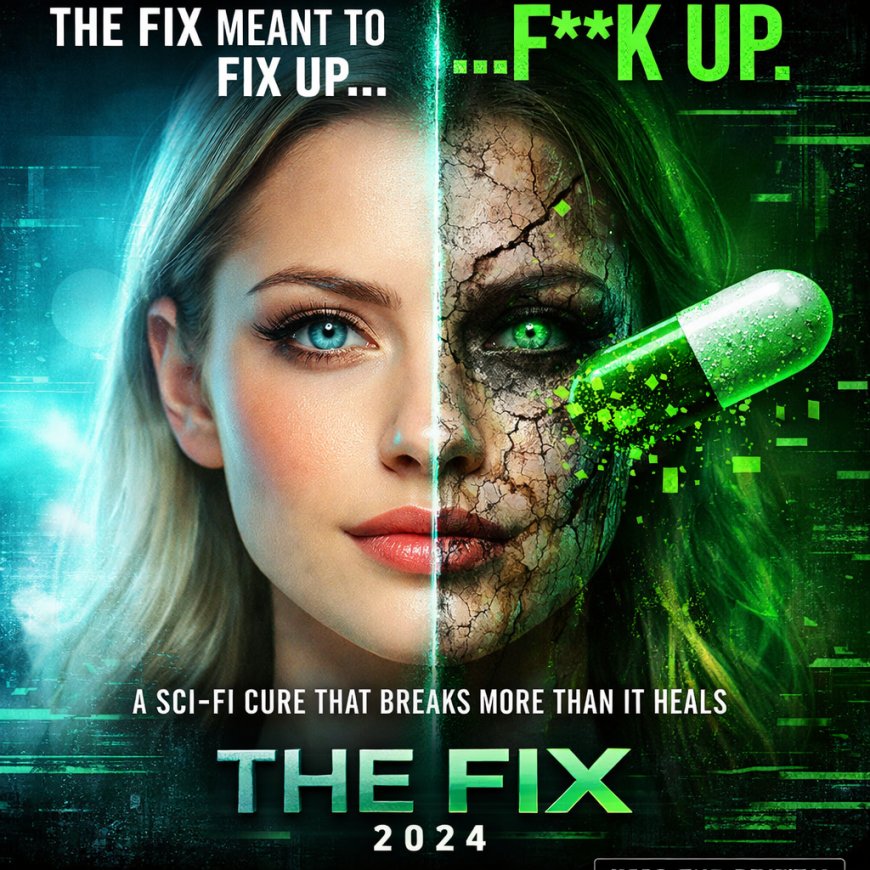
The Fix (2024) positions itself as a sharp, futuristic warning—an elegant dystopian sci-fi thriller about beauty, biohacking, and modern society’s obsession with perfection. In a world already addicted to filters, fillers, and pharmaceutical shortcuts, the film’s premise feels timely, dangerous, and disturbingly believable.
Yet what unfolds is a cinematic contradiction.
In attempting to critique humanity’s desire to be “fixed,” The Fix ultimately exposes its own unwillingness to confront discomfort, moral decay, and psychological consequence. This The Fix 2024 review examines why the film’s ambition collapses under rushed storytelling, shallow characterization, and a fear of letting its ideas truly rot.
The Core Idea of The Fix — Brilliant, But Afraid
At its conceptual center, The Fix movie explained is terrifyingly simple:
A pharmaceutical solution promises beauty, confidence, and social elevation—at the cost of identity, autonomy, and humanity.
This places The Fix firmly among dystopian sci-fi movies of 2024 that explore corporate bio-capitalism, engineered desire, and optimization culture. It flirts with classic cautionary science fiction—where convenience slowly mutates into corruption.
But instead of allowing the drug’s influence to spread gradually, the film accelerates its consequences.
There is no gradual moral erosion.
No creeping dependency.
No internal negotiation between benefit and loss.
The “fix” does not seduce—it detonates.
And that single creative decision weakens everything that follows.
Why Slow Corruption Matters in Dystopian Sci-Fi
Great dystopian cinema understands one rule:
Horror must feel inevitable, not scheduled.
In films that truly succeed within the biohacking films or pharma conspiracy movies space, transformation is subtle. Characters justify small compromises—each one reasonable—until the damage becomes irreversible.
The Fix skips this essential process.
Characters leap from curiosity to catastrophe so quickly that consequences feel manufactured. The discomfort sci-fi thrives on is replaced by narrative urgency. The result is tension without dread.
Ironically, the film warns against shortcuts—while taking one at every narrative turn.
Beauty Obsession Without Psychological Weight
The Fix claims to interrogate:
-
Algorithm-driven beauty standards
-
Cosmetic obsession
-
The monetization of insecurity
Yet its sharpest irony is this:
It treats its characters exactly the way the drug treats bodies—replaceable, shallow, unfinished.
Grace Van Dien’s protagonist exists between fear and fascination, but the script never allows her internal conflict to mature. Her transformation is visual, not psychological.
She does not become something else.
She is processed into something else.
For a film positioned as beauty obsession sci-fi, this absence of psychological depth is a critical failure. Without inner consequence, the commentary remains cosmetic.
Humans as Products, Not People
One of the most damaging elements of The Fix sci-fi film review is how the film reduces humanity to symbols rather than people.
Characters are:
-
Defined by reaction, not decision
-
Pushed by plot, not desire
-
Changed by events, not belief
This mirrors the very system the film claims to criticize.
Corporate bio-capitalism is shown, but never understood. Exploitation exists, but ideology does not. Antagonists operate because the genre requires villains—not because they genuinely believe in what they’re selling.
This removes the most frightening element of dystopia: conviction.
Corporate Evil Without Philosophy
In stronger futuristic thriller reviews, corporate antagonists are terrifying because they are logical. They believe optimization is progress. They justify harm as efficiency.
In The Fix, corporate figures are painted in broad strokes:
-
Cold
-
Predictable
-
Conveniently immoral
There is no ideological tension. No believable worldview. Without that, the dystopia feels hollow.
We are told the system is dangerous—but never shown why intelligent people would defend it.
Style Over Substance: When Dystopia Becomes Aesthetic
Visually, The Fix understands the assignment.
The film delivers:
-
Sterile laboratories
-
Neon-lit interiors
-
Cold, clinical framing
But aesthetic dystopia without philosophical depth is just costume.
The film looks like it has something to say.
It rarely pauses long enough to say it.
This places The Fix among modern dystopian films that resemble content pipelines rather than ideological explorations.
It looks dystopian.
It behaves algorithmically.
The Fix Ending Meaning — Closure Instead of Consequence
The The Fix ending meaning attempts to warn audiences about the dangers of shortcuts to perfection.
But instead of lingering unease, it offers resolution.
Great sci-fi ends with discomfort.
The Fix ends with relief.
By choosing narrative closure over moral disturbance, the film neutralizes its own message. Viewers are released from reflection at the exact moment they should feel trapped by it.
Why The Fix Ultimately Fails
The failure of The Fix (2024) is not a lack of ambition—it is a lack of courage.
The film wants to critique:
-
Beauty myths
-
Corporate greed
-
Human insecurity
But it refuses to let its characters, its audience, or itself truly suffer.
As a result, this The Fix 2024 review concludes that the film becomes the very thing it warns against—a polished shortcut pretending to be depth.
Final Verdict
⭐ Rating: 2.5 / 5
The Fix is a film that wanted to be a warning but settled for presentation. It diagnoses real cultural anxieties but prescribes surface-level solutions.
It didn’t fix us.
It didn’t even fully break us.
It simply proved that not everything broken should be made easier to consume.
FAQs – The Fix (2024) Movie Review
Q1. Is The Fix (2024) a dystopian sci-fi movie?
Yes, The Fix (2024) is a dystopian sci-fi movie that explores futuristic beauty standards, biohacking, and corporate control through a pharmaceutical perfection drug.
Q2. What is The Fix (2024) movie about?
The Fix (2024) is about a drug that promises physical perfection and social acceptance, highlighting beauty obsession, biohacking culture, and the dangers of corporate exploitation.
Q3. What does the ending of The Fix (2024) mean?
The ending of The Fix (2024) warns against shortcuts to perfection but chooses narrative closure over lasting discomfort, reducing the impact of its dystopian message.
Q4. Is The Fix (2024) worth watching?
The Fix (2024) is worth watching for its concept and visuals, but viewers expecting deep psychological or philosophical sci-fi may find it lacking.
Q5. Is The Fix a biohacking sci-fi film?
Yes, The Fix is a biohacking sci-fi film that focuses on human modification through pharmaceuticals, though it avoids deep exploration of long-term consequences.
Q6. How does The Fix compare to other dystopian sci-fi movies of 2024?
Compared to other dystopian sci-fi movies of 2024, The Fix emphasizes style and pacing over slow-burn psychological and moral complexity.
Q7. Does The Fix critique beauty obsession effectively?
The Fix critiques beauty obsession by showing perfection as a commodity, but its analysis remains surface-level rather than psychologically immersive.
Q8. Is The Fix similar to pharma conspiracy movies?
The Fix shares themes with pharma conspiracy movies by portraying profit-driven pharmaceutical control, though it lacks ideological depth.
Q9. What genre does The Fix (2024) belong to?
The Fix (2024) belongs to the dystopian sci-fi thriller genre, combining futuristic visuals with themes of biohacking and corporate greed.
Q10. What is the main criticism of The Fix (2024)?
The main criticism of The Fix (2024) is that it warns against shortcuts to perfection while taking narrative shortcuts itself.