The Two Towers Wasn’t Just the Middle Film - It Was LOTR at Its Absolute Peak
Everyone praises the ending, but The Two Towers is where Lord of the Rings truly peaked. From Helm’s Deep to Gollum, this is Tolkien’s saga at its most powerful.
 Rafat Shakeel Chaudhary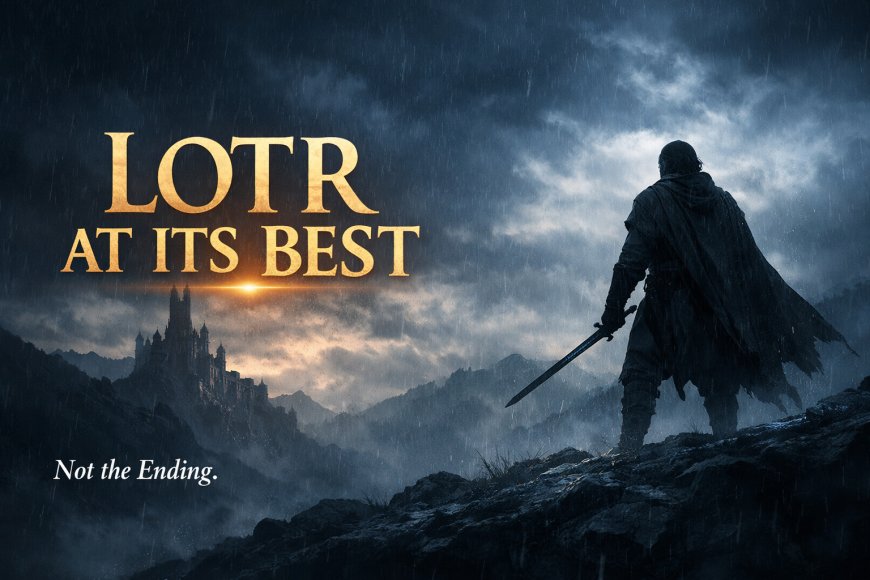
While The Fellowship of the Ring introduced the magic and The Return of the King claimed the glory, The Two Towers became the moment where Middle-earth truly came alive — darker, harsher, and unforgettable.
This wasn’t a bridge film.
It was the backbone.
The Comfort Is Gone — And That’s the Point
By The Two Towers, the safety net is ripped away.
The Fellowship is broken
Hope feels temporary
Survival becomes the only objective
No prophecies guide the characters anymore. No guarantees remain. Every step forward feels earned — and risky.
That raw uncertainty is what gives the film its unmatched intensity.
Helm’s Deep Still Feels Untouchable
Before fantasy battles turned into pixel-heavy spectacles, Helm’s Deep showed what cinematic war should feel like.
Cold. Loud. Relentless.
Rain-soaked armor, exhausted soldiers, and a sense that defeat is inevitable — the battle doesn’t glorify war, it tests endurance. Even decades later, it remains the gold standard for epic filmmaking.
Gollum Made Fantasy Deeply Human
No character in the trilogy is as psychologically rich as Gollum — and The Two Towers is where he becomes legendary.
His internal conflict isn’t about good versus evil.
It’s about addiction, guilt, and self-loathing.
When Frodo looks at Gollum, he’s not judging him — he’s seeing himself.
That quiet horror lingers far longer than any battle.
Samwise Gamgee Delivers the Trilogy’s Soul
There are bigger speeches later. Louder victories too.
But Sam’s speech about stories that matter — about holding onto good when everything feels lost — is the emotional core of the entire saga.
It’s not just memorable.
It’s timeless.
Why The Two Towers Ages the Best
Rewatch the trilogy today:
Fellowship feels magical
Return of the King feels monumental
The Two Towers feels real
It’s the film most grounded in consequence, character, and emotional weight — which is why it resonates even more with time.
Final Verdict
The Two Towers didn’t need endings or Oscars to prove its greatness.
It stood tall on conflict, courage, and human fragility.
And that’s why it wasn’t just the middle chapter —
it was Lord of the Rings at its absolute peak.